
 By
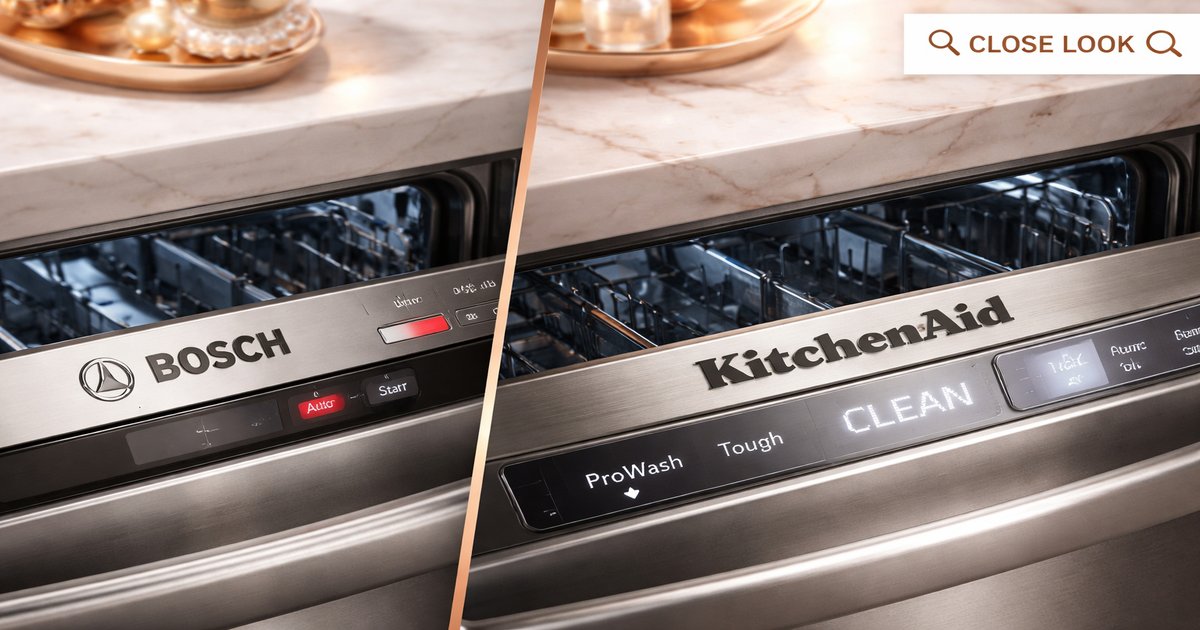
By You’re tired of washing dishes by hand, and the mountain of plates piling up isn’t helping. Choosing the right dishwasher can make the difference between a kitchen nightmare and a seamless cleanup. Bosch and KitchenAid are two formidable opponents in this arena, but which one deserves a spot in your home?
| Feature | Bosch Dishwasher | KitchenAid Dishwasher |
|---|---|---|
| Noise Level | 44 dB | 46 dB |
| Third Rack | ✓ | ✓ |
| Energy Star Certified | ✓ | ✓ |
| Adjustable Racks | ✓ | ✓ |
| Price Range | $800 – $1,500 | $900 – $1,700 |
| Drying Technology | Condensation | Heated Dry |
✅ Bosch Dishwasher Pros
- Exceptionally quiet operation at 44 dB.
- Efficient energy use and Energy Star certified.
- Innovative third rack for extra capacity.
❌ Bosch Dishwasher Cons
- Higher upfront cost for top-end models.
- Condensation drying can leave plastics damp.
✅ KitchenAid Pros
- Effective heated dry option leaves dishes ready to shelve.
- Sturdy build quality with a premium feel.
- Flexible loading options with adjustable racks.
❌ KitchenAid Cons
- Slightly noisier at 46 dB.
- Higher maintenance costs over time.
Performance
When it comes to noise levels, Bosch takes the crown. If you’re living in an open-plan space, the 44 dB operation of the Bosch is barely a whisper. KitchenAid, while slightly noisier at 46 dB, still performs admirably in reducing sound but doesn’t quite hit Bosch’s tranquil levels. Both brands offer robust cleaning power, but KitchenAid’s heated dry function ensures your dishes come out bone-dry, a handy feature if you often wash plastic items that tend to hold water in Bosch’s condensation-based drying.
Build Quality
KitchenAid’s dishwashers are built like tanks. You’ll appreciate the solid, premium feel every time you load it up. The design is functional yet elegant, perfect for a modern kitchen aesthetic. Bosch, while also well-constructed, focuses more on sleekness and efficiency. The third rack in Bosch models adds versatility without sacrificing their renowned reliability. Both brands offer durable stainless steel interiors, but KitchenAid edges out slightly with its attention to robust exterior details.
Value for Money
Bosch offers great value, especially if you prioritize energy savings and quiet operation. It’s an investment that pays off in lower utility bills and peace of mind. KitchenAid, while pricier, provides added value with its heated drying option and overall sturdiness. If you’re willing to spend a bit more initially, KitchenAid’s build quality and drying efficiency make it a worthwhile purchase for those who hate wiping down dishes post-wash.
Bosch’s condensation drying might leave you with damp plastics, and that’s something to consider if you use a lot of Tupperware. KitchenAid, although excellent with its drying feature, can cost you extra in maintenance if any parts fail, as repair parts tend to be more expensive.
Our Final Verdict: Which One Should You Buy?
If you value whisper-quiet operation and want the most energy-efficient option, pick Bosch. It’s perfect for those who prefer a serene environment and are particular about energy consumption. Choose KitchenAid if you need a robust machine that dries dishes impeccably and can handle heavy-duty use. It’s ideal for larger families or anyone who can’t stand damp dishware.
Is the third rack useful in both models?
Absolutely, the third rack adds extra space and is a great feature for both Bosch and KitchenAid, allowing you to fit more utensils and smaller items.
How does the drying technology affect energy use?
Bosch’s condensation drying is more energy-efficient, while KitchenAid’s heated dry uses more energy but provides superior drying results.
Are these dishwashers easy to install?
Both models come with clear instructions and are designed for straightforward installation. However, professional installation is recommended to ensure optimal performance and safety.