
 By
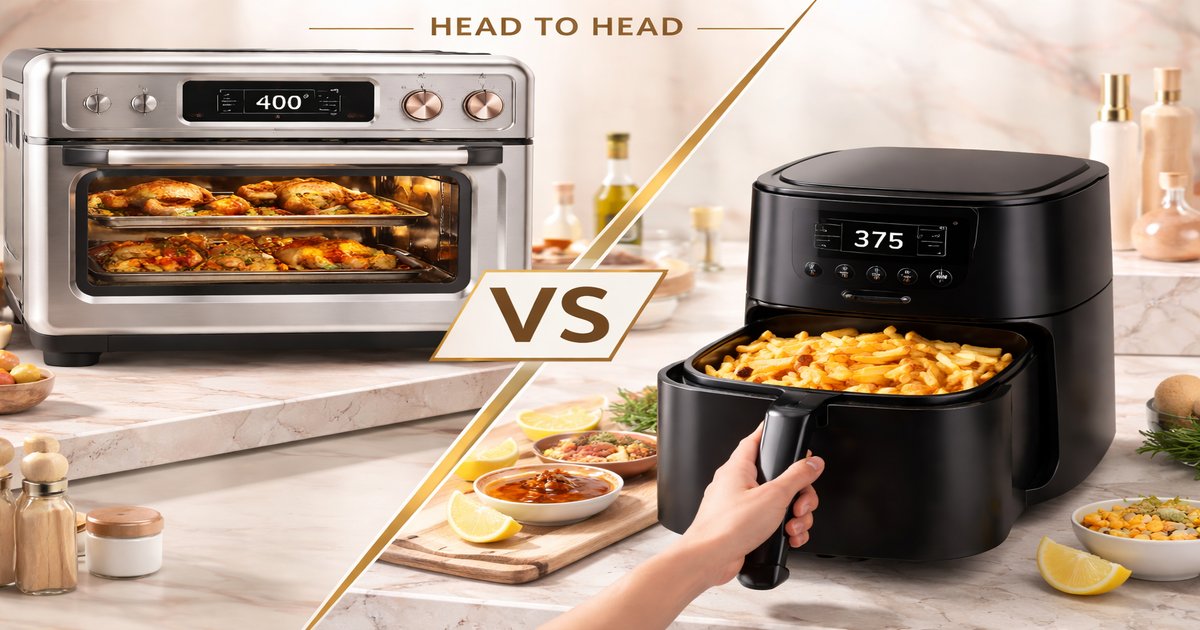
By You’ve got limited counter space and a love for crispy, evenly cooked meals. But do you invest in a convection oven or an air fryer? Both promise delicious results, but which one deserves that coveted spot in your kitchen?
| Feature | Convection Oven | Air Fryer |
|---|---|---|
| Cooking Capacity | 20-30 Liters | 2-5 Liters |
| Cooking Speed | Moderate | Fast |
| Energy Efficiency | ✗ | ✓ |
| Versatility | ✓ | ✗ |
| Size | Large | Compact |
| Ease of Cleaning | ✗ | ✓ |
✅ convection oven Pros
- Large cooking capacity ideal for family meals.
- Versatile functions like baking, roasting, and broiling.
- Even heat distribution for consistent cooking.
❌ convection oven Cons
- Bulkier and takes up more counter space.
- Longer preheat and cooking times.
- Can be more difficult to clean.
✅ air fryer Pros
- Compact and space-saving design.
- Quick cooking times ideal for fast meals.
- Energy-efficient, consuming less power.
❌ air fryer Cons
- Limited cooking capacity, not ideal for large families.
- Less versatile, mainly used for frying and reheating.
Performance: Speed vs. Capacity
When it comes to performance, consider what you prioritize: speed or capacity. Air fryers are champions of speed, cutting down cooking times significantly, which is perfect for quick snacks or side dishes. However, if you’re cooking a whole chicken or multiple dishes simultaneously, a convection oven is the way to go. It might take longer to heat up, but its larger capacity makes it ideal for family dinners or meal prep.
Build Quality: Durability and Maintenance
Convection ovens generally have a more robust build, often coming with stainless steel interiors that can withstand high temperatures and prolonged use. But cleaning can be a chore, especially with baked-on grime. Air fryers, while typically constructed from plastic, benefit from removable baskets and non-stick coatings, making them a breeze to clean. However, their lightweight build can be less durable over the long term.
Value: Long-term Investment
Convection ovens are a more significant initial investment but offer more versatility and longevity for your buck. They can replace several appliances in your kitchen, adding value over time. Air fryers, with their lower upfront cost and energy efficiency, are great for those who want quick results without breaking the bank. However, if you’re looking for a device that can handle a multitude of tasks, the convection oven pulls ahead in long-term value.
While air fryers are marketed as oil-free fryers, they don’t quite replicate the taste and texture of deep-fried food. Convection ovens, on the other hand, can struggle with crispiness, requiring more time and some manual intervention (turning food) to achieve similar results. Factor these nuances into your decision.
Our Final Verdict: Which One Should You Buy?
If you’re a busy individual or a small household looking for quick, crispy meals with minimal fuss, the air fryer is your best bet. But if you cook for a family or enjoy experimenting with various recipes, invest in a convection oven. It’s a versatile powerhouse that can handle all your culinary needs.
Can a convection oven replace a regular oven?
Yes, a convection oven can replace a regular oven for most tasks. It cooks more evenly and can often do so faster, but might not match the capacity of a full-sized oven.
Is an air fryer healthier than a convection oven?
Air fryers use less oil, which can make for healthier meals compared to traditional frying. However, both appliances offer healthier cooking methods than deep frying.
How long do these appliances typically last?
Convection ovens, with their durable build, can last upwards of 10 years with proper care. Air fryers, depending on use and maintenance, typically last 3-5 years.