
 By
By You’ve got a craving for a perfect bowl of rice, but the question lingers: should you go with the classic stove top method or embrace the modern convenience of a rice cooker? Each option has its merits, and your choice might just depend on your lifestyle and culinary habits.
| Feature | Rice Cooker | Stove Top |
|---|---|---|
| Cooking Time | 20-30 minutes | 15-25 minutes |
| Consistency | High | Variable |
| Ease of Use | ✓ | ✗ |
| Versatility | ✓ | ✗ |
| Price Range | $20-$200 | None |
| Monitoring Required | ✗ | ✓ |
✅ rice cooker Pros
- Consistent results with minimal effort.
- Can cook a variety of grains and even some dishes.
- Automated features save time and attention.
❌ rice cooker Cons
- Takes up counter space.
- Initial cost can be significant.
- Another appliance to maintain and clean.
✅ stove top Pros
- No additional cost if you already have a pot and stove.
- Control over the cooking process and adjustments.
- Utilizes existing kitchen equipment.
❌ stove top Cons
- Requires constant monitoring to prevent burning.
- Results can be inconsistent without experience.
Performance
The rice cooker shines in delivering consistent results every time. You simply add the rice and water, press a button, and walk away. The stove top method demands your attention; you need to get the water-to-rice ratio just right and keep an eye on the heat to avoid burning. If you’re juggling multiple kitchen tasks, a rice cooker is your set-it-and-forget-it partner, while the stove top offers a more hands-on experience that can vary with each use.
Build Quality and Maintenance
Rice cookers vary widely in build quality. Budget models can feel flimsy, while high-end ones boast solid construction and additional features like sauté settings or delay timers. Cleaning a rice cooker is generally easy with non-stick interiors. On the other hand, a pot used on the stove top is as durable as your cookware gets, needing only basic cleaning after each use. Both options are durable, but your choice may depend on how much you value convenience versus simplicity.
Value
A good rice cooker can cost anywhere from $20 to $200, making it an investment. But for frequent rice eaters, the convenience and consistency it offers can quickly justify the price. The stove top method, however, requires no additional purchase beyond what you already have. If you’re occasional with your rice consumption, your existing pot might be all you need. The value comes down to how often you cook rice and your tolerance for variance in quality.
Rice cookers are fantastic, but they’re not magic. They can’t fix your water-to-rice ratio if you get it wrong. Also, cheaper models might struggle with brown rice or other grains. Stove top cooking can yield excellent results, but it demands attention and practice to master the technique.
Our Final Verdict: Which One Should You Buy?
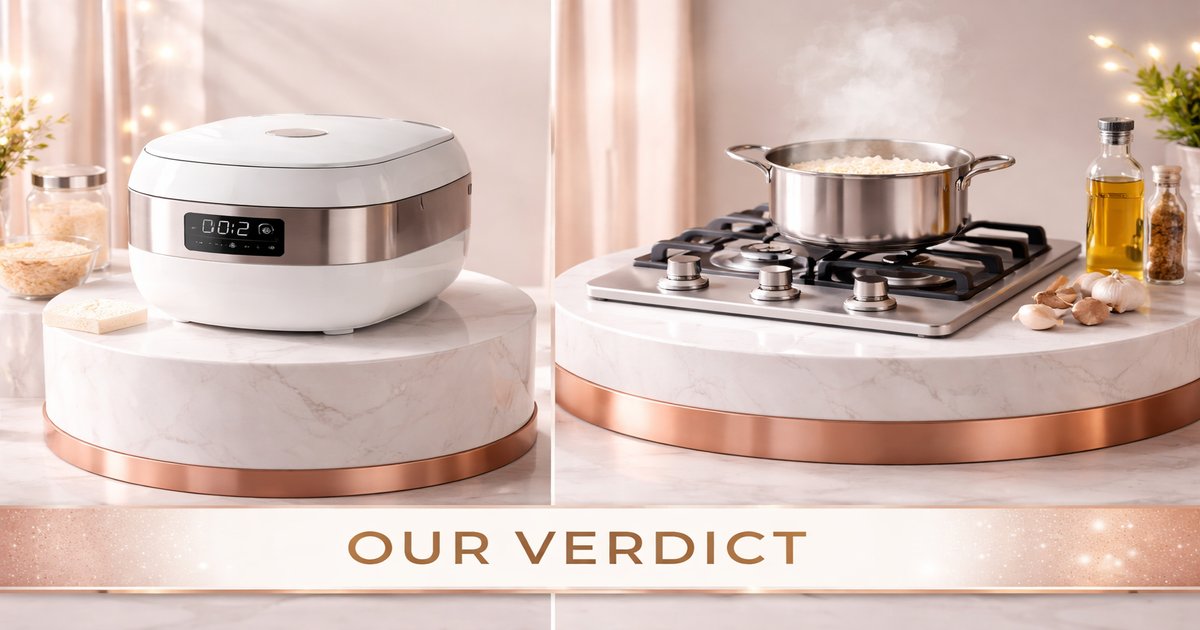
If you’re someone who eats rice several times a week and values convenience above all, the rice cooker is your best bet. It’s perfect for the busy professional or the multitasking parent. However, if you appreciate having control over your cooking process and prefer to spend less, the stove top method is ideal for the home chef who enjoys being hands-on in the kitchen.
Do rice cookers work for all types of rice and grains?
Most rice cookers handle white and brown rice well, but some models may not perform as well with specialty grains unless specified.
How long does a rice cooker last?
With proper care and maintenance, a good rice cooker can last 5 to 10 years. The lifespan largely depends on usage and build quality.
Is the stove top method really more cost-effective?
Yes, if you already own a pot and stove, there’s no extra cost. However, the time and attention required might make it less efficient for frequent use.