
 By
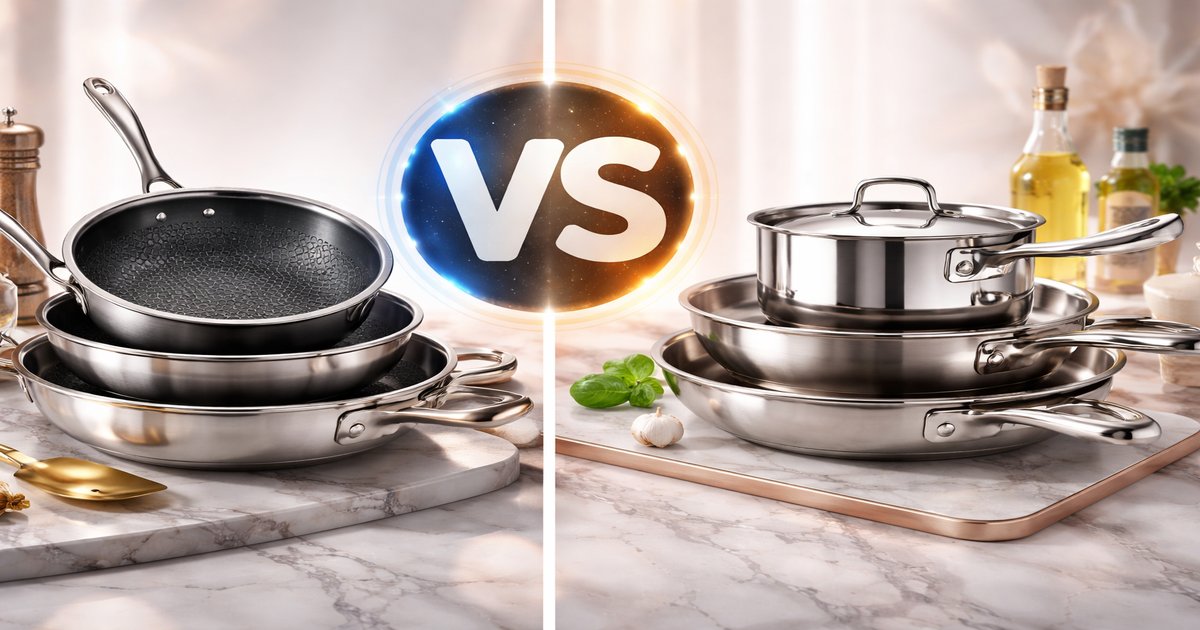
By You love cooking, but you’re tired of scrubbing burnt bits off your pans. You’re ready to invest in some reliable cookware, but how do you choose between HexClad and All-Clad? Both promise top-notch performance, but which one deserves a spot in your kitchen?
| Feature | HexClad | All-Clad |
|---|---|---|
| Material | Hybrid (Stainless Steel & Nonstick) | Stainless Steel |
| Oven Safe Temperature | 500°F | 600°F |
| Induction Compatible | ✓ | ✓ |
| Dishwasher Safe | ✓ | ✓ |
| Nonstick Coating | ✓ (Hybrid) | ✗ |
| Warranty | Lifetime | Lifetime |
✅ hexclad Pros
- Hybrid surface offers nonstick convenience with stainless steel durability.
- Easy to clean and dishwasher safe.
- Lifetime warranty ensures a long-term investment.
❌ hexclad Cons
- Nonstick surface can wear over time with heavy use.
- Pricier than some other nonstick options.
✅ all-clad Pros
- Exceptionally durable with pure stainless steel construction.
- Oven safe up to 600°F, ideal for high-heat cooking.
- Even heat distribution for perfect cooking results.
❌ all-clad Cons
- Requires more effort to clean than nonstick options.
- Heavy and not ideal for those with weak wrists.
Performance
HexClad’s hybrid technology aims to give you the best of both worlds—nonstick convenience with the searing power of stainless steel. If you’re sautéing veggies or scrambling eggs, this pan makes it effortless. All-Clad, on the other hand, shines in high-heat cooking scenarios. If you’re searing steaks or deglazing pans, you’ll appreciate its superior heat retention and distribution. Your choice here depends on whether you prioritize ease of use or cooking performance.
Build Quality
All-Clad’s stainless steel is a workhorse. It’s heavy, yes, but that’s a testament to its durability. You’ll get years of use, and it can take a beating without showing wear. HexClad’s unique hybrid design adds a layer of nonstick protection, but it doesn’t feel as indestructible as All-Clad. If you prefer something that’s built like a tank, All-Clad wins this round hands down.
Value
Both brands come with a lifetime warranty, suggesting a long-term investment. HexClad’s hybrid design makes it versatile, essentially offering two pans in one. If you’re looking for versatility, HexClad offers more bang for your buck. All-Clad may have a higher upfront cost, but you’ll never need to replace it unless you want to. For those who value durability above all, it’s the clear choice.
HexClad’s nonstick surface can degrade, especially if you frequently use metal utensils or high heat. All-Clad’s stainless steel might last forever, but you’ll spend a good chunk of time scrubbing stuck-on food. If you cook daily and hate the cleanup, consider this in your decision.
Our Final Verdict: Which One Should You Buy?
For the versatile home cook who values ease of use and minimal cleanup, HexClad is your best bet. Its hybrid surface makes daily cooking a breeze. But if you’re a serious cook who wants professional-level performance and doesn’t mind putting in a little elbow grease, All-Clad is the cookware for you. It’s perfect for those who love to experiment with high-heat recipes and demand longevity from their kitchen tools.
Is HexClad suitable for induction cooktops?
Yes, HexClad is fully compatible with induction cooktops, thanks to its magnetic steel layer.
Does All-Clad pan discolor over time?
Stainless steel can show signs of discoloration, especially after high-heat cooking, but it doesn’t affect performance.
Can I use metal utensils with HexClad?
While HexClad claims to be metal utensil safe, using softer utensils like wood or silicone can prolong the life of the nonstick surface.